






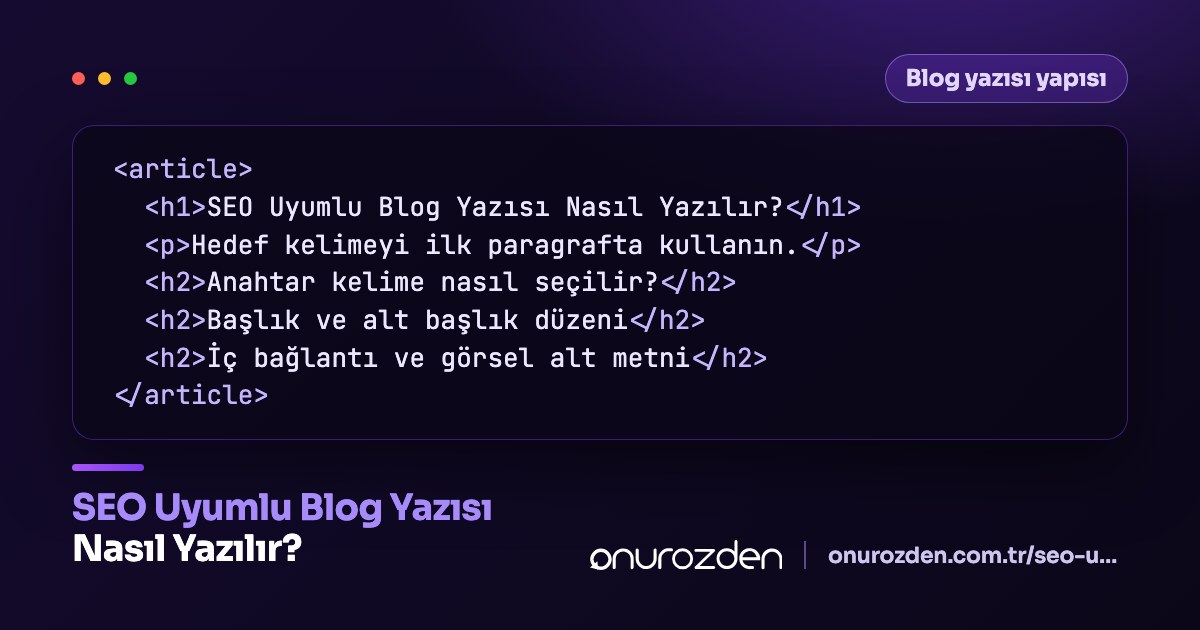
To rank higher in search engines and increase organic traffic How to write SEO compatible content The answer to the question lies in producing technically optimized texts that meet user intent, have the right keyword structure. Older generation techniques that only target search engine bots are now obsolete. Today, a successful blog post must both comply with the semantic integrity standards of Google algorithms and meet the information needs of real visitors as quickly as possible. When you establish this balance, your website's authority increases and you get permanent rankings for the words you target.
What is SEO Compatible Content and Why is it Important?
SEO compatible content is qualified texts that are prepared in accordance with the search engines' scanning and interpretation criteria, and also directly respond to the user's search purpose. The main importance of this content is that it provides a constant and free flow of organic visitors to your site. For example, let's take an e-commerce site that sells organic baby clothes. This business can target the topics that expectant mothers are looking for, rather than trying to sell products directly. In a blog post published on the site, the importance of using organic cotton for baby skin health is explained and the target word is mentioned naturally in the first paragraph. In this way, potential customers who have not yet made a purchasing decision are attracted to the site. Even a 3% conversion rate of these visitors over time allows regular sales revenue to be obtained without spending an advertising budget.
Keyword Analysis and How to Determine User Intent?
Keyword analysis is the process of detecting which words your target audience uses in search engines and deciphering the real purpose behind these words. An article written without choosing the right words cannot reach its target audience, no matter how technically perfect it is. To manage this process successfully, you can follow these steps:
- List the main questions and issues people ask about your industry.
- Analyze the search volumes and competition rates of the topics you have determined.
- Classify search intent as seeking information, purchasing, or searching for a brand.
- Determine the variants of the keyword and distribute them to different subheadings of the content.
Free search to find the right words for your site Keyword Analysis You can use our tool. When you enter the main term you target into this tool, you can instantly see critical data such as search volume and word difficulty and shape your content plan according to this data. This way, you will avoid wasting effort on words that have no search volume.
How Should the Heading (H1, H2, H3) Hierarchy Be Established?
Heading hierarchy is the skeletal structure that allows a content to be easily crawled by both search engine bots and readers. Each article should have only one H1 heading, and subtopics should be structured with H2 and H3 tags in order of importance. This hierarchical order shows Google bots which topic the page covers and in what depth.
| Hashtag | Intended Use | Ideal Character Limit | Keyword Type |
|---|---|---|---|
| H1 | Page title and main topic description | 50-65 Characters | main keyword |
| H2 | Main subheadings and main sections | 60-70 Characters | Primary variants |
| H3 | Details and lists under H2 | 50-70 Characters | long tail words |
Correct use of HTML coding and structured data is required for search engines to fully understand the page structure. In the example below, you can examine the JSON-LD schema code of a blog post, which tells search engines the correct title hierarchy and page structure:
<h1>SEO Uyumlu Blog Yazısı Nasıl Yazılır?</h1>
<h2>Anahtar Kelime Analizi</h2>
<h3>Arama Hacmi Hesaplama</h3>
<script type="application/ld+json">
{
  "@context": "https://schema.org",
  "@type": "BlogPosting",
  "headline": "SEO Uyumlu Blog Yazısı Nasıl Yazılır?",
  "author": {
    "@type": "Organization",
    "name": "Onur Özden Web Çözümleri"
  }
}
</script>
The h1 tag in the code lines above represents the main title of the page. h2 and h3 tags determine the sub-sections of the topic. The JSON-LD data in the script block informs search engine bots in a standard format that this page is a professional blog post.
Meta How to Optimize Title and Description?
Meta title and description optimization is the most important technical regulation that directly determines the click-through rate of users to your site on the search results page. These areas do not appear directly on the page, but serve as a showcase of your site in search engine results. When performing this optimization, you should follow this five-step checklist for each post:
- Meta ensure that the title remains within 60-65 characters.
- Use the main keyword in the leftmost part of the meta title.
- Meta Write a clear summary, keeping the description within 120-160 characters.
- Meta Include expressions in the description that motivate the user and encourage them to click.
- Include a variant of the target word naturally in the description field.
To test how your posts will appear in search results and control character limits Meta Tag Analysis You can use our tool. When you enter the title and description texts you prepared into this tool, you can instantly see the preview in mobile and desktop search results and easily correct the overflow parts.
What Should the Internal and External Linking Strategy Be?
Internal and external linking strategy balances the authority distribution between your website's pages and helps search engine bots crawl your site more deeply. Linking to other valuable articles on your site increases the time visitors stay on the site and reduces the bounce rate. Following these steps when linking increases your chances of success:
- Identify the sentence in the text that contains a related topic.
- Select the keyword of the target page you will link to as the anchor text.
- Make the anchor text bold so users notice it.
- Link at most twice to reliable and official external sources that support the topic.
For example, if you are talking about growing your digital assets in a content you have prepared, you should use professionally designed content. on organic traffic You can make a natural transition to our service page where you provide information about. Likewise, when explaining writing techniques for different types of content How to Write a Promotional Article You can provide additional resources to your readers by linking to our guide.
Image Alt Texts and Media Optimization
Image alt text and media optimization are essential to maintain your website loading speed and drive traffic from Google Images search results. Search engine bots cannot see the content of images like humans, so they understand what the image is about through alt texts (alt tags). The following rules should be taken into consideration in media optimization:
- Reduce file sizes by converting all images to WebP format.
- Choose image filenames from relevant words rather than random characters.
- Use short Turkish sentences in the visual subtext that clearly describe the image.
- Optimize image sizes according to maximum width limits.
When adding your images to the HTML code structure, you should structure them so that search engines can read them. The following code example demonstrates a correct image alt text definition:
<img src="seo-uyumlu-yazi-plani.webp" alt="SEO uyumlu blog yazısı yazarken hazırlanan içerik planı şeması" />While the src field in this line of code points to the optimized image file, the alt attribute clearly explains the content of the image to search engine bots.
Common Mistakes in SEO Compatible Content Writing
Some critical mistakes made by content producers and site owners while trying to rank higher in search engines can lead to the site being penalized or losing ranking. Being aware of these errors and applying the correct methods increases your content quality. The most common errors in the industry and their solutions are:
- Keyword stuffing: Repeating the target word unnaturally frequently within the text will distract the reader. As a solution, you should keep the keyword density between 1% and 2% and use synonymous words.
- Ignoring user intent: Trying to sell directly to a user searching for information increases the bounce rate. As a solution, you should shape the title and structure of the content according to the user's search purpose.
- Irregular title structure: Using H2 after the H3 tag or repeating the H1 tag multiple times will confuse bots. As a workaround, you should always sort the title hierarchy from largest to smallest.
- Bypassing image optimization: Uploading very high-sized images reduces page opening speed. As a solution, you should compress the images and upload them in WebP format and write descriptive alt text for each image.
- Poorly readable paragraphs: Continuously written paragraphs longer than 6-7 lines make it difficult for mobile users to read. As a solution, you should limit paragraphs to 3-4 sentences maximum and break up the text with lists.
You can get expert support to increase the visibility of your website in search engines and manage all these technical steps professionally. You can contact us for professional solutions and take the performance of your site to the next level.
How many words should an SEO compatible blog post have?
An SEO friendly blog post should be at least 500 words, depending on the depth of the topic. For comprehensive and competitive topics, keeping this limit between 1000 and 2000 words increases the chance of success.
What percentage should the keyword density be?
It is ideal for the keyword density in the content to be between 1% and 2%. Usage above this rate may be perceived as spam by search engines.
Is it harmful to write multiple blog posts on the same keyword?
Yes, writing multiple posts targeting the same keyword leads to keyword cannibalization. This causes your pages to compete with each other and lose rankings.
Is it mandatory to use keywords in image alt tags?
Although it is not mandatory, including the keyword in the alt text in a way that is compatible with the content of the image will help you appear in image searches. However, word stuffing mistakes should be avoided.
Can I make my old blog posts SEO compatible again by updating them?
Yes, refreshing old posts with updated information, adding new keywords and fixing technical errors will quickly increase your organic traffic.