






We have left behind a difficult year 2025. Frankly, it was a problematic year in terms of profit for many businesses, including us. Let's take a look at how the Turkish digital market enters 2026. Namely, internet and mobile usage rates are increasing and e-commerce volume is expanding. The problem is not here, it starts with the increasing advantages of the big players. Growth does not produce equal results for all players.
The picture that has been clearly seen in the last few years is this: The gap in visibility and performance between companies operating in the same sector is gradually widening. Among the main reasons for this, the following stand out:
- Intensifying competition and proliferation of similar content
- Advertising costs approaching unsustainable levels
- Users begin to act more consciously and selectively
- Search engines measure quality in more depth
As we enter 2026, "existing" in the digital market is not enough. How one exists, what signals generate trust, and how much the infrastructure supports this process become decisive.
| SEO Topic | Past Period Approach | 2026 SEO Reality |
|---|---|---|
| Keyword Usage | Heavy keyword repetition was important for ranking | Semantic meaning and user intent are much more decisive |
| Content Length | Medium length content was sufficient | In-depth, comprehensive and authoritative content stands out |
| Backlink Strategy | The number of links was at the forefront | The authority of the link and the context of the content are more important |
| User Experience | It was seen as a separate issue from SEO | Core Web Vitals and user experience ranking factor |
| Artificial Intelligence Effect | It was used on a limited basis | AI-powered search systems analyze content |
| Search Results | User was selecting from the list | Artificial intelligence moves to a direct-answer model |
| Content Format | Mainly blog posts and landing pages | Definition blocks, tables, lists and FAQ are more important |
| Brand Authority | Domain age and backlink strength were decisive | Digital trust signals and expertise are more important |
| SEO Purposes | rise to the top in Google | Be visible in search engines and AI response systems |
What Has Google and Artificial Intelligence-Assisted Search Behaviors Changed?
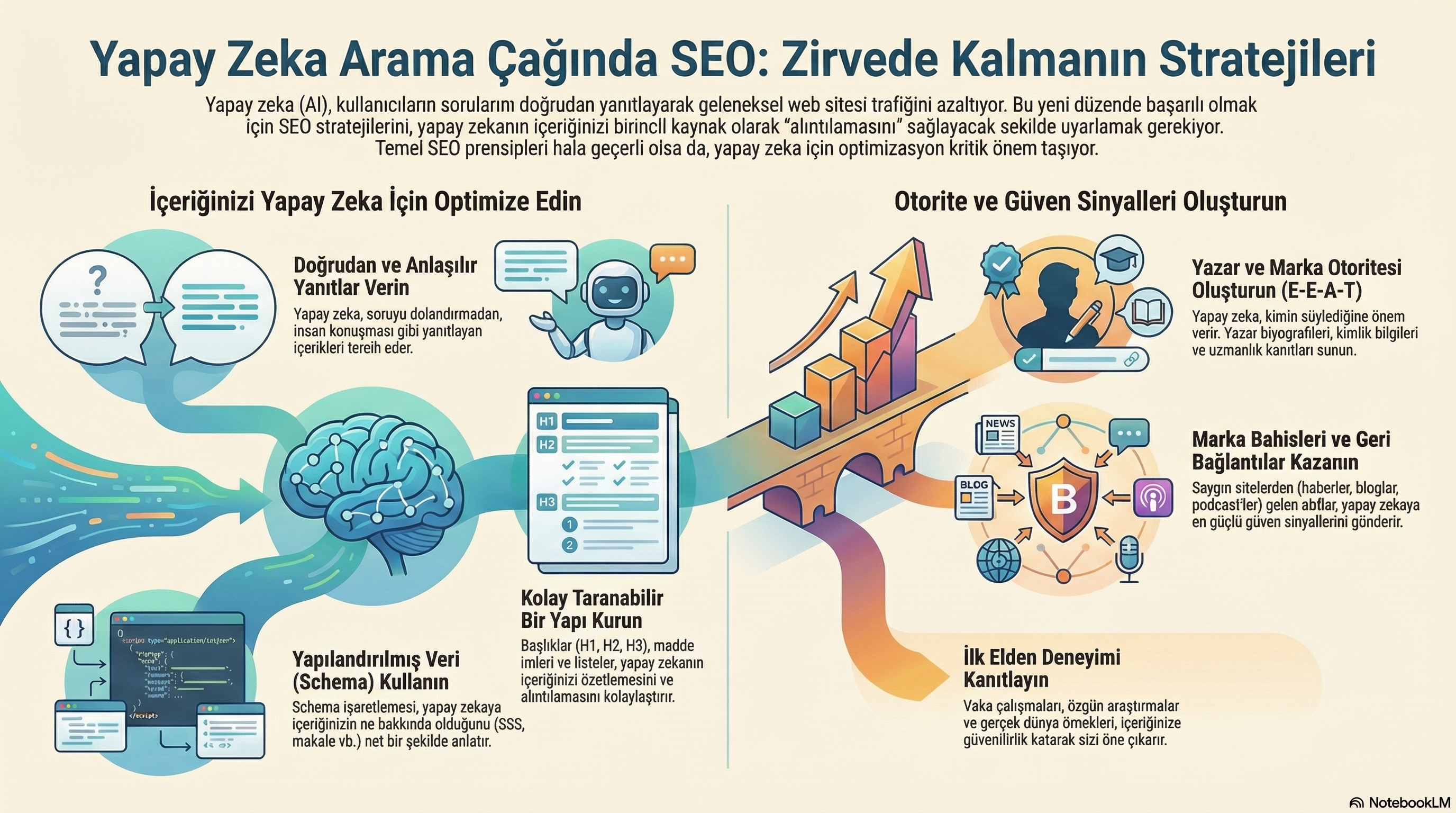
The steps taken by Google in recent years have transformed the search engine from a listing tool to a response engine. With artificial intelligence-supported search experiences, there is a significant change in user behavior.
Now users:
- Makes longer and more contextual queries instead of single-word searches
- Comparison, comments and evaluation await
- Wants to get answers to more than one question on the same page
This change affects the basic logic of SEO. Google is no longer just looking for answers to the question "which word is used?", but to the following questions:
- What does this content really say?
- Is there subject integrity?
- Will the user be satisfied with this page?
- Is the source reliable, is the context consistent?
As we approach 2026, the impact of superficial, repetitive and keyword-only content is rapidly decreasing. Search engines highlight structures that can understand intent and provide comprehensive answers.
Why SEO is No Longer Just a Keyword and Backlink Job in 2026?
For many years What is SEO? The answer to the question was largely identified with content production. More articles, more pages, more keywords… However, today this approach alone is not enough.
The scope of SEO has expanded and turned into a multi-layered structure. Besides the content, the following areas directly affect the ranking:
- Page experience and user interaction
- Technical structure and scannability
- Site architecture and internal links
- Signals of trust and authority
2026 SEOstands at the intersection of marketing and technical infrastructure. Content is still important, but it is no longer the sole carrier. Content needs to be presented in the right context, under the right technical conditions, and with the right authority signals.

Why Backlinking Has Become More Difficult But More Valuable
Backlinking continues to be one of the most misunderstood areas of SEO. The backlink approach, which was considered numerically in the past, is largely out of date today.
As we approach 2026, getting backlinks has become difficult for the following reasons:
- Google better analyzes the connection context
- Easier detection of irrelevant and artificial links
- Reduced impact of links from the same sources
In contrast, truly valuable backlinks began to generate much stronger signals. What matters now is:
- Harmony of source
- The content carries the link naturally
- The link makes a real contribution to the user
- Source's own level of trust and authority
This turns backlinking from an automatic process into a strategic work. Like everything that gets more difficult, backlinks become more valuable when done correctly.
Why Did Server and Infrastructure Become Part of SEO?
SEO and server optimization were treated as separate disciplines for a long time. However, the weight Google gave to performance and experience metrics virtually eliminated this distinction.
Today's infrastructure problems directly affect SEO performance. In particular, the following topics stand out:
- Server response times and stability
- Resilience to traffic increases
- Security vulnerabilities and outages
- Efficient use of scanning budget
As we approach 2026, a fast but unstable site poses more risks than a slow but stable site. Infrastructure is no longer just the IT department's responsibility, SEO It has become one of the basic components of its strategy.
What Should Companies Do That Want to Get Results from SEO in 2026?
In the new era, the approach of companies that want to get sustainable results from SEO has to change. A holistic perspective is needed instead of piecemeal solutions.
The key highlights are:
- Handling SEO together with content, backlinks and infrastructure
- Aiming for long-term visibility rather than short-term jumps
- Developing content strategies centered on user intent
- Managing technical issues proactively rather than reactively
For companies that adopt this approach SEO, not cost; It becomes a digital asset that produces value over time.
What to Look for When Choosing a Company?
As we enter 2026 SEO company selection becomes one of the most critical points of SEO success. What needs to be considered here is the approach rather than the promises made.
When evaluating an agency, clear answers to the following questions should be sought:
- Does he see SEO as content only, or does it also include technical and authority aspects?
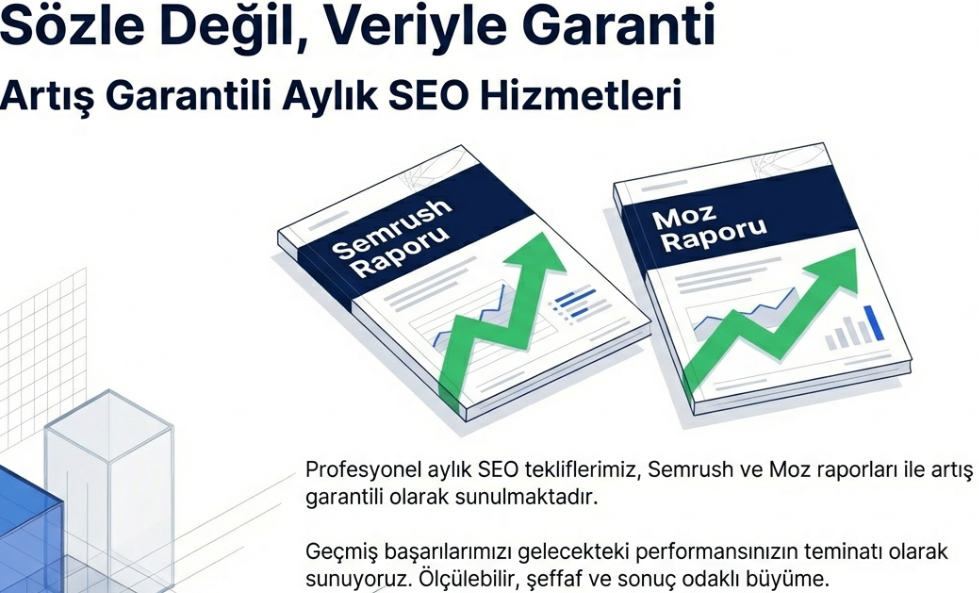
- Does it present the backlink as a product or does it handle it through context and quality?
- Does it consider infrastructure and performance issues as part of the strategy?
- Does it update its approach according to changing Google behaviors?
The agency's language, reporting structure and proposed road map often clearly show the answers to these questions. Because SEO It is no longer a one-time application, but a strategy that needs to be constantly updated.