






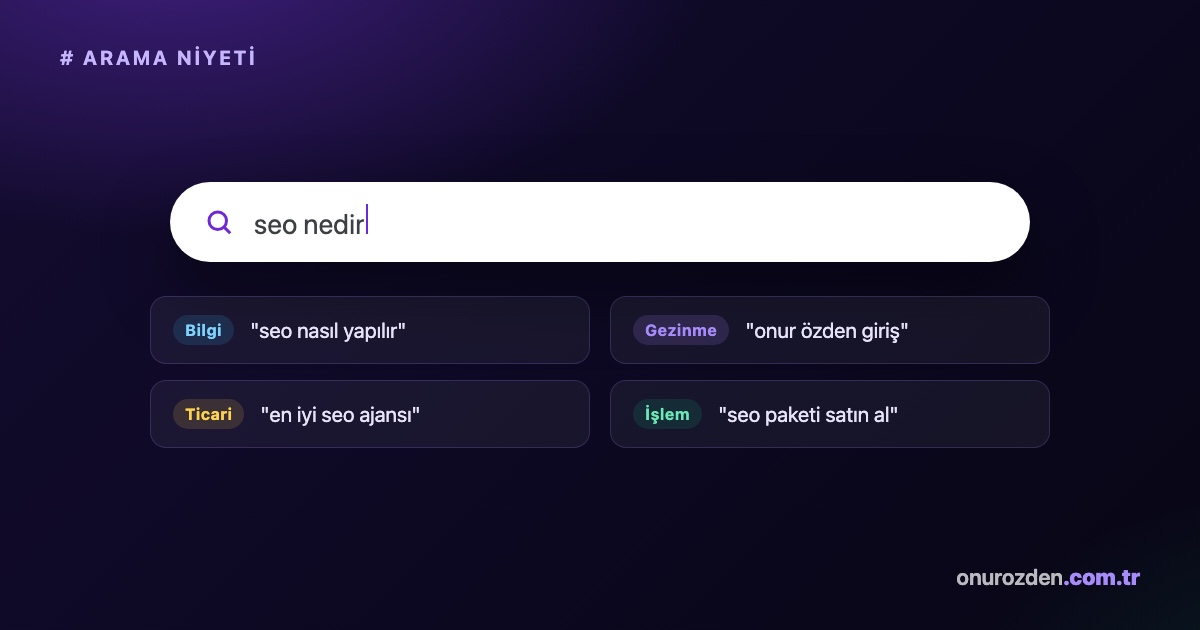
What is search intent? The clearest answer to the question is that it expresses the real purpose of a user in the background when typing a certain word into the search engine, the expectation of obtaining information or purchasing. Google and other modern search engines focus on the real need behind those letters, not just the letters users type. Therefore, in order for your website to rank high in the words it targets, the content you produce must fully meet the user's search intent. Establishing a correct content strategy means reading your target audience's mind and providing them with the answer they are looking for as quickly as possible.
What is Search Intent and Why is It Important for SEO?
Search intent is the ultimate benefit the user wants to obtain when typing a query into the Google search box. In the SEO world, this concept is often referred to with the English term search intent. Google aims to keep user satisfaction at the highest level when listing search results. If a user types a word into the search engine and immediately exits the page without getting the answer he/she is looking for, the search engine understands that this page does not meet the search intent and reduces the ranking of the site. This forms the basis of search engine optimization efforts.
For example, let's take an e-commerce site with a monthly search volume of 10,000. Let's say this e-commerce site wants to attract organic traffic for the coffee machines it sells. A content strategy prepared without analyzing users' research on search engines will lead to budget loss. If an informative article published on the site's blog page does not directly appeal to a user at the purchasing stage, the conversion rate will remain low. How to Write an SEO Compatible Blog Post Content prepared in accordance with the rules should respond to the user's search for information, while product pages should directly focus on purchasing intention. Striking this balance will permanently increase conversion rates while reducing your site's bounce rate.
What are the Search Intent Types? Separation of Information, Commercial and Transactional Intent
Search intention types are classified into four basic groups according to users' behavioral patterns in the digital world. These classes; It includes obtaining information, going to a specific website, conducting commercial research before purchasing, and direct purchasing. The page structure and content structure that the user should encounter for each type of intent is completely different. In the table below, you can examine these four basic types of search intent, users' actual purposes, and sample queries they use in search engines.
| Search Intent Type | User Purpose | Sample Search Query | Targeted Page Type |
|---|---|---|---|
| Obtaining Information (Informational) | Getting and learning detailed information about a subject | How to store coffee beans | Blog Post, Guide |
| Navigational | Direct access to a specific brand's website | Onur Özden entry | Home Page, Login Page |
| Commercial Research | Comparing products and brands before purchasing | best filter coffee machine | Category, Comparison List |
| Transactional | Purchasing a product or service directly | buy filter coffee machine | Product Page, Payment Page |
As can be seen from this table, each intent type represents a different stage in the user's purchasing process. Showing a sales-focused product page to a user intent on obtaining information will cause the user to leave the page immediately. Likewise, trying to make a user who has reached the purchasing stage and is waiting with a credit card in his hand to read long guide texts will cause you to miss the sale.
How to Determine Search Intent of Keywords?
The most reliable source for determining the search intent behind a keyword is the Google search results pages themselves. Google already lists the optimal result type for each word by analyzing the behavior of millions of users. Therefore, it is best to type your target word into the search engine and examine the first page you see. You can perform search intent analysis by following these steps:
SERP Analysis Steps
- Search for your targeted keyword on Google in the incognito tab.
- Determine what type of pages the top 10 results on the first page are (blog post, e-commerce category, product page, or tool).
- Pay attention to search results highlights (FAQs, video results, image packs or maps).
- Create your own content template by examining the title structures that users click on most and the content formats these pages offer.
If the first page of the search results is completely occupied by blog posts, the intention of that word is definitely to obtain information. However, if you see a lot of sponsored ads and e-commerce product listings in the search results, you can easily understand that that word has a commercial or transactional intent.
How Do Artificial Intelligence Search Engines Interpret Search Intent?
Artificial intelligence search engines go beyond traditional keyword matches and analyze the semantic integrity and context of the sentence the user types. Artificial intelligence systems such as ChatGPT, Gemini and Perplexity scan information on websites and cite the most accurate sources while producing direct answers to users' complex questions. To be visible in this new generation search world, your content must be easily scanned and interpreted by artificial intelligence.
To be successful in artificial intelligence-driven visibility studies and to ensure that modern search engines cite your site, it is important to meet the following criteria:
- Enable artificial intelligence to access information quickly by using direct and clear definitions in your content.
- Support the accuracy and timeliness of the answers to the questions with official sources.
- By optimizing the technical infrastructure of your website, enable search engine bots to crawl your site without obstacles.
- Establish semantic relationships by structuring the content on your site within the framework of subject integrity.
In order for artificial intelligence systems to analyze your website correctly, you should carry out technical SEO and content optimization together. If you would like to get professional support in this process, our agency offers: artificial intelligence seo By taking advantage of our services, you can now secure your site's place in the search engines of the future.
How to Optimize Content Based on Search Intent?
Optimizing content based on search intent requires using structural templates and technical tags appropriate to the intent type of the word you are targeting. In content with the intention of obtaining information, identifying the questions most frequently asked by users and presenting them as structured data on the page makes the job of search engines easier. For example, by using the FAQ Schema, you can take up more space in the search results and attract users' attention.
Below is a sample JSON-LD schema code structure that you can use in an informative blog post:
<script type="application/ld+json">
{
  "@context": "https://schema.org",
  "@type": "FAQPage",
  "mainEntity": [{
    "@type": "Question",
    "name": "Arama niyeti analizi nasıl yapılır?",
    "acceptedAnswer": {
      "@type": "Answer",
      "text": "Arama niyeti analizi, hedef kelimenin Google arama sonuçlarındaki ilk sayfa yapısı incelenerek ve kullanıcı beklentileri analiz edilerek yapılır."
    }
  }]
}
</script>
The script tag above tells browsers that this content is a FAQ page. The FAQPage definition in the second line determines the structured data type of the page. The mainEntity field on the third line initializes the list of questions asked. Question and Answer tags directly convey the question asked by the user and the clear answer given to this question to the search engine, respectively. Thanks to this structural coding, search engines make sense of your content faster.
What are the Common Mistakes in Search Intent Analysis?
The most common mistake content creators and SEO experts make in the search intent setting process is to ignore the purpose behind the word by focusing only on high search volume. Just because a word has a high number of monthly searches does not mean that that word will directly bring customers to your site. Common mistakes made and the correct solutions to these mistakes are as follows:
- Just Looking at Search Volume: Instead of just selecting high-volume words and producing content without analyzing intent, you should also focus on commercial and transactional words with high conversion potential.
- Targeting with the Wrong Page Type: Instead of trying to rank higher with a blog post on a purchase intent keyword, you should target these words directly with your e-commerce category or product pages.
- Putting User Experience in the Second Plane: Instead of kidnapping the user by making aggressive sales offers directly to the user looking for information, you should first provide information and then make natural redirects after gaining trust.
By avoiding these mistakes, you can fully meet the search intent of visitors to your site and increase the overall authority of your site by significantly reducing bounce rates.
How to Perform Keyword Analysis with Free Tools?
The first step to accurately analyze search intent is to determine which words users use in search engines and how. Getting support from professional tools to create the right content structure on your website will speed up the process. The free tools on our site directly contribute to your understanding of the potential and search dynamics of keywords.
free on our website Keyword Analysis You can easily analyze the words you target by using the tool. When you type the keyword you want to analyze into the tool and press the query button, you will see the search volumes associated with that word and similar searches made by users on a single screen. Thanks to this data, you can quickly determine which words have informational intent and which have commercial research intent and build your content calendar on accurate data.
When you analyze users' search purposes correctly and optimize your content accordingly, it will be inevitable for you to achieve permanent success in search engines. You can take a look at our professional solutions to increase your website's organic traffic and conversion rates, and contact us immediately to develop strategies specific to your business.
Does search intent analysis directly affect SEO success?
Yes, pages that do not meet the user's search intent will have a high bounce rate and quickly fall down the Google rankings.
Can a word have more than one search intent?
Yes, some words can have both informational and commercial research purposes, and this is called mixed search intent.
Can search intent change over time?
Yes, the search purpose of certain words may differ due to periodic trends, technological developments or changes in user habits.
How does Google detect search intent?
Google detects users by analyzing their click behavior in search results, page stay times and bounce rates with artificial intelligence algorithms.